What AI Can and Cannot Do in People Leadership
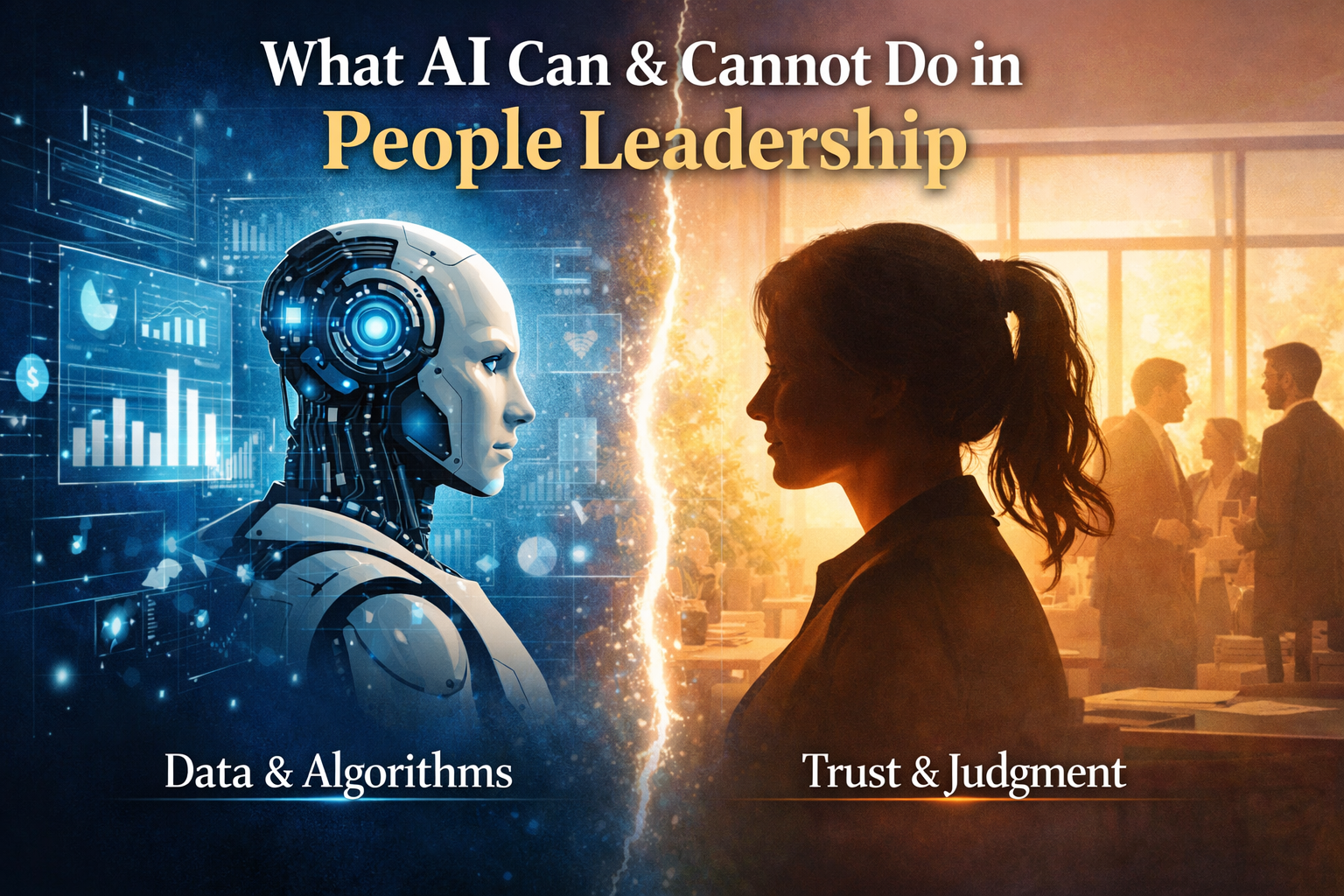
llustration showing AI and human leadership facing each other, highlighting the difference between data-driven HR tools and human judgment in people leadership.
My client (I'll call her Dana) just finished a quarterly review where every metric looked good. Headcount up. Attrition down. Engagement scores at an all-time high. On Monday morning she sent me a Slack: "I don't know why, but something feels really off. I can't explain it."
A month later, one of her best leaders quietly gave notice. Two others followed. The engagement score that looked so good had been masking a culture shift that the data hadn't caught yet, but that Dana had felt in her gut before she had the words for it.
That's the gap I keep thinking about as AI becomes more central to how companies manage people. The tools are remarkable. They're getting better every month. Yes, they genuinely cannot do the most important part of this work.
WHAT AI DOES WELL AND GENUINELY HELPS
I want to be honest here, because I think the most useful version of this conversation isn't "AI versus humans." It's understanding where each one belongs.
AI is genuinely useful for drafting job descriptions, offer letters, and documentation. It screens resumes at scale, it tracks compliance deadlines, analyzes patterns in engagement data, and generates performance review prompts that help managers who don't know how to start.
If you're not using AI for this work, you're probably spending time on things that don't require your attention. Use the tools. They're good! Notice what they're good at: the structured, the repeatable, the things that can be templated. That's a real category of work.
THE 5 DECISIONS AI CANNOT MAKE
Who leads next.
Succession decisions (whether you're planning ahead or navigating an unexpected departure) are some of the most consequential calls a company ever makes. And they can't be made by analyzing performance data alone. The real question is never just "who's performing well right now?" It's: who will hold steady under pressure they haven't faced yet? Who has the judgment to navigate uncertainty? Who do people actually follow when things get hard? AI can tell you what someone has done. It cannot tell you who they are under pressure.What's actually happening in your culture.
Culture problems are almost always visible before they're measurable. They live in the things people won't say in a survey, in the energy shift when a certain leader walks into a room, in the small workarounds that people create because something about the system doesn't feel safe to challenge. By the time a culture problem shows up clearly in your data, it has already been real for a long time. Repairing culture requires someone who can read what's not being said, earn trust slowly, and have the kind of honest conversations that don't happen in a tool.What to do when your leadership team is pulling in different directions.
This one is almost never about strategy. It's usually about something more human: competing values, unclear ownership, an unspoken disagreement about where the company is heading. And it compounds quietly until it doesn't. Addressing it requires someone who can sit with the tension, understand both sides without taking sides too early, and help the organization get clear, even when clarity is uncomfortable.How to repair trust after a hard decision.
Layoffs. Restructures. Performance exits. These things leave marks, even when they're handled well. And the 90 days that follow are often more important than the decision itself. What you say, how you say it, who you bring into the conversation, and how consistently you follow through - all of it shapes whether the team heals or quietly quits. What works for one company doesn’t work for all. The plan has to be built for your people, your culture, and the specific moment.When and how to let someone go.
Most leaders know this decision needs to happen before they're ready to make it. And they wait. Not because they're conflict-averse (though sometimes that too), but because the stakes are real: someone's livelihood, the team's morale, the message it sends about what the company values. Doing this well, with honesty, care, and the right level of process, requires someone who has been through it before and knows what it actually costs when it goes wrong.
SO WHAT DOES THIS MEAN FOR YOU?
Dana's story didn't end badly. We figured out what was happening early enough to change course. Not because of a dashboard, but because she trusted something she felt before she could prove it, and because she had someone to call who would take that seriously.
That's the thing about the decisions that actually shape a company: they require someone who shows up for the messy, uncertain, human part of the work.
AI is changing what's possible in HR. It's making transactions faster, data richer, and processes lighter. As that happens, the remaining work, judgment, trust, and the courage to make and own hard calls become more valuable.
If you're leading a growing company and you're starting to feel the weight of decisions you weren't carrying a year ago, Our team at Tandem would love to talk. Not to pitch you. Just to think through it together. That's usually how the most useful conversations start.